
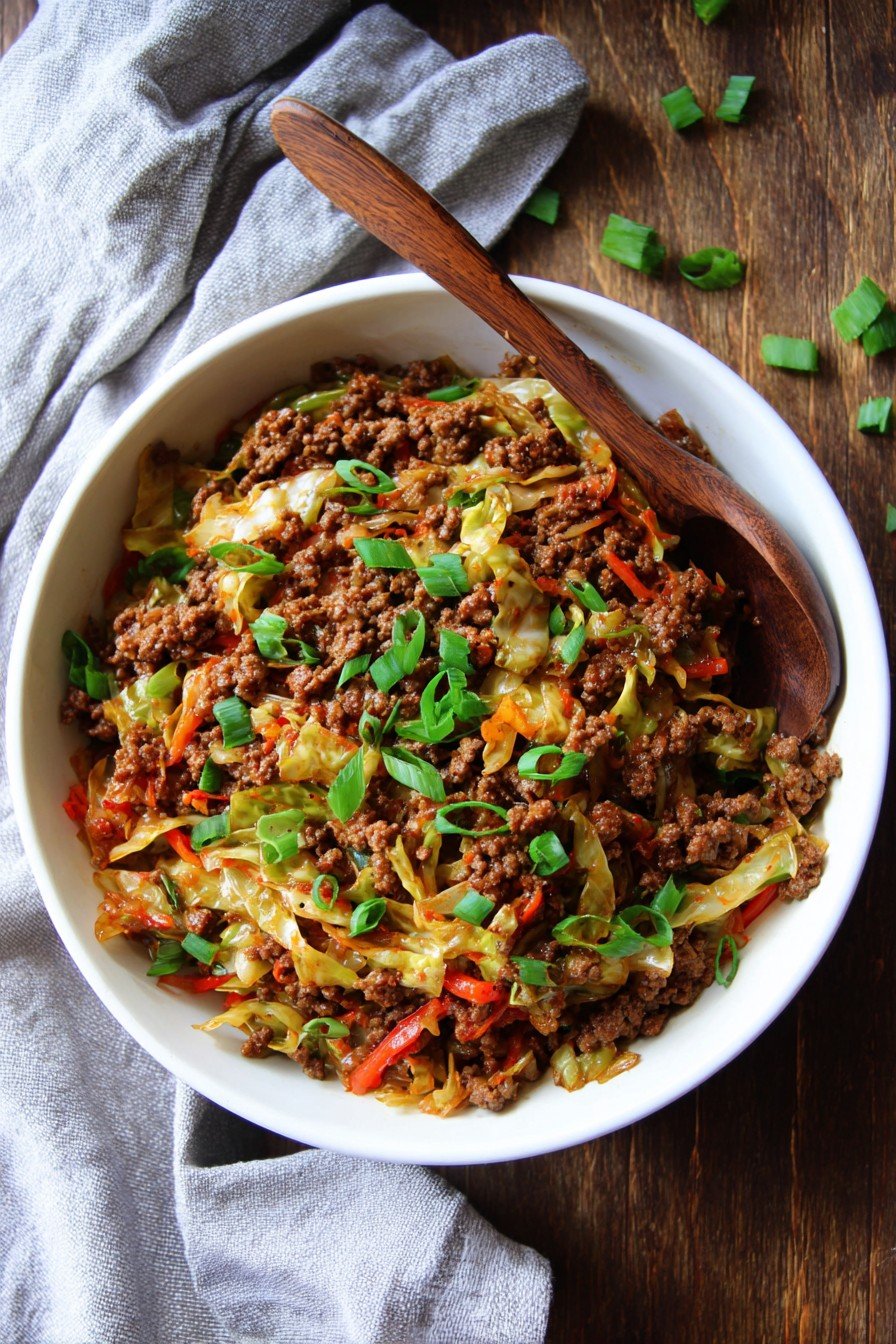
Hey y'all! If you're looking for a fast, flavorful, and satisfying meal that doesn't stray from your low-carb goals, this Low-Carb Mongolian Ground Beef and Cabbage is a must-try. Juicy Ground Beef meets crisp-tender cabbage in a savory, garlicky Mongolian sauce—perfect for busy weeknights, meal prep, or even impressing dinner guests. Let's get cooking!
Why You'll Love This
- Quick & Easy: Ready in just 25 minutes from start to finish.
- One-Pan Wonder: Minimal clean-up with a simple skillet prep.
- Low-Carb & Keto Friendly: Just 6g net carbs per serving!
- Super Flavorful: Sweet, salty, and garlicky Mongolian sauce coats every bite.
- Versatile: Easily adjust protein or veggies to suit your taste.
Ingredients
- 1 pound (450g) ground beef (80/20 or leaner)
- 6 cups (about 1 medium) green cabbage, thinly sliced
- 1 tablespoon avocado oil (or olive oil)
- 4 cloves garlic, minced
- 1-inch piece fresh ginger, grated (about 1 tablespoon)
- ¼ cup soy sauce (or coconut aminos for gluten-free/paleo)
- 2 tablespoons dark brown sugar substitute (like Swerve Brown or monk fruit)
- 2 tablespoons water
- 1 teaspoon toasted sesame oil
- ¼ teaspoon red pepper flakes (optional, for heat)
- 2 green onions, sliced, plus more for garnish
- 1 tablespoon sesame seeds, for garnish
- Salt and pepper to taste
Directions
Step 1: Prep the Cabbage and Aromatics
- Thinly slice the green cabbage and set aside. Mince the garlic and grate the ginger.
Step 2: Brown the Ground Beef
- In a large skillet or wok, heat avocado oil over medium-high heat. Add the ground beef, breaking it apart with a spoon. Cook for 4–5 minutes until browned and mostly cooked through. Drain excess fat if needed.
Step 3: Add Garlic and Ginger
- Add minced garlic and grated ginger to the beef. Sauté for about 1 minute, stirring constantly, until fragrant.
Step 4: Stir in the Cabbage
- Add sliced cabbage to the skillet. Stir well to combine, then cook for 4–6 minutes, stirring occasionally, until the cabbage is crisp-tender.
Step 5: Make the Mongolian Sauce
- In a small bowl, whisk together soy sauce, brown sugar substitute, water, sesame oil, and red pepper flakes (if using).
Step 6: Combine and Finish
- Pour the sauce over the beef and cabbage. Toss everything together until coated. Cook 2–3 more minutes, stirring, until heated through and sauce is slightly thickened.
- Stir in sliced green onions. Taste and season with salt and pepper as needed.
Step 7: Serve
- Transfer to plates and garnish with extra green onions and sesame seeds. Enjoy hot!
Notes
- If your skillet renders a lot of fat from the beef, drain some before adding the cabbage for a lighter dish.
- Do not overcook the cabbage—stop when it's just crisp-tender for the best texture.
- Add more red pepper flakes if you prefer a spicy kick.
Variations
- Ground Turkey: Swap ground beef for turkey or chicken for a lighter protein.
- Extra Veggies: Add shredded carrots, bell peppers, or snap peas for more color and crunch.
- Sugar-Free Teriyaki: Use a sugar-free teriyaki sauce in place of the homemade Mongolian sauce.
Required Equipment
- Large skillet or wok
- Sharp knife and cutting board
- Mixing bowl (for sauce)
- Measuring cups and spoons
- Wooden spoon or spatula
Storage Instructions
- Store leftovers in an airtight container in the refrigerator for up to 4 days.
- Reheat in a skillet over medium heat or in the microwave until hot.
- Freezing is not recommended as the cabbage may become soggy upon thawing.
Suggested Pairings & Serving Recommendations
- Serve over cauliflower rice to keep it low-carb.
- Pair with a simple cucumber salad or steamed broccoli.
- Top with sriracha or chili garlic sauce for extra heat.
Pro Tips
- Slice cabbage as evenly as possible for uniform cooking and texture.
- Let the Mongolian sauce simmer an extra minute to thicken more if desired.
- For bolder flavor, marinate the beef in half the sauce 15 minutes before cooking.
FAQ
- Can I use pre-shredded cabbage (coleslaw mix)?
- Absolutely! Pre-shredded cabbage is a great shortcut—just measure out about 6 cups.
- Is this recipe gluten-free?
- Yes, as long as you use gluten-free soy sauce or coconut aminos.
- Can I make this ahead for meal prep?
- Yes, this dish holds up well for 3-4 days in the fridge. Reheat gently to preserve texture.
Ingredients
- 1 pound (450g) ground beef (80/20 or leaner)
- 6 cups (about 1 medium) green cabbage, thinly sliced
- 1 tablespoon avocado oil (or olive oil)
- 4 cloves garlic, minced
- 1-inch piece fresh ginger, grated (about 1 tablespoon)
- ¼ cup soy sauce (or coconut aminos for gluten-free/paleo)
- 2 tablespoons dark brown sugar substitute (like Swerve Brown or monk fruit)
- 2 tablespoons water
- 1 teaspoon toasted sesame oil
- ¼ teaspoon red pepper flakes (optional, for heat)
- 2 green onions, sliced, plus more for garnish
- 1 tablespoon sesame seeds, for garnish
- Salt and pepper to taste
Instructions
-
1Thinly slice the green cabbage and set aside. Mince the garlic and grate the ginger.
-
2In a large skillet or wok, heat avocado oil over medium-high heat. Add the ground beef, breaking it apart with a spoon. Cook for 4–5 minutes until browned and mostly cooked through. Drain excess fat if needed.
-
3Add minced garlic and grated ginger to the beef. Sauté for about 1 minute, stirring constantly, until fragrant.
-
4Add sliced cabbage to the skillet. Stir well to combine, then cook for 4–6 minutes, stirring occasionally, until the cabbage is crisp-tender.
-
5In a small bowl, whisk together soy sauce, brown sugar substitute, water, sesame oil, and red pepper flakes (if using).
-
6Pour the sauce over the beef and cabbage. Toss everything together until coated. Cook 2–3 more minutes, stirring, until heated through and sauce is slightly thickened.
-
7Stir in sliced green onions. Taste and season with salt and pepper as needed.
-
8Transfer to plates and garnish with extra green onions and sesame seeds. Enjoy hot!
Approximate Information for One Serving
Nutrition Disclaimers
Number of total servings shown is approximate. Actual number of servings will depend on your preferred portion sizes.
Nutritional values shown are general guidelines and reflect information for 1 serving using the ingredients listed, not including any optional ingredients. Actual macros may vary slightly depending on specific brands and types of ingredients used.
To determine the weight of one serving, prepare the recipe as instructed. Weigh the finished recipe, then divide the weight of the finished recipe (not including the weight of the container the food is in) by the desired number of servings. Result will be the weight of one serving.
Did you make this recipe?
Please consider Pinning it!

Leave a Reply