
If you're searching for the ultimate Philly Cheesesteak Recipe with Peppers and Onions, you're in the right place. This classic American sandwich has its roots firmly planted in Philadelphia, where it became a beloved street food icon in the 1930s.
Originally, the Philly cheesesteak featured thinly sliced beef and melted cheese stuffed in a soft Italian roll. Over time, the addition of sautéed peppers and onions elevated its flavor profile, creating a symphony of savory, cheesy, and slightly sweet notes.
Throughout the years, the Philly cheesesteak has spread from busy Philadelphia street vendors to restaurant menus across the United States and, now, home kitchens worldwide. With this recipe, you'll recreate that unmistakable blend of tender beef, gooey cheese, sweet onions, and vibrant peppers in your own kitchen.
The secret lies in selecting the right cuts of steak and ensuring your vegetables are caramelized just enough to complement the rich beef.
For those interested in the sandwich's fascinating history, sites like Visit Philly delve deeper into its roots at https://www.visitphilly.com/things-to-do/food-drink/the-history-of-the-cheesesteak/. Whether you're a loyal fan or a first-time taster, making your own Philly Cheesesteak Recipe with Peppers and Onions lets you control every ingredient while capturing all the flavors of this East Coast classic.
Ingredients for Philly Cheesesteak Recipe with Peppers and Onions
- 1 lb ribeye steak, thinly sliced
- 2 tablespoons olive oil
- 1 large yellow onion, thinly sliced
- 1 large green bell pepper, thinly sliced
- 1 large red bell pepper, thinly sliced
- 4 hoagie or submarine rolls
- 8 slices provolone cheese (or Cheez Whiz or American, per preference)
- Salt and freshly ground black pepper, to taste
- Optional: 1 tablespoon Worcestershire sauce
- Optional: 2 tablespoons mayonnaise
Instructions for Making Philly Cheesesteak Recipe with Peppers and Onions
- Place the ribeye steak in the freezer for about 30 minutes to firm it up, making it easier to slice very thin.
- Once chilled, use a sharp knife to thinly slice the steak against the grain.
- Heat 1 tablespoon of olive oil in a large skillet or griddle over medium-high heat.
- Add the sliced onions and bell peppers. Cook, stirring occasionally, until the vegetables are soft and slightly caramelized, about 7-8 minutes. Season with salt and pepper.
- Remove the peppers and onions from the pan and set aside.
- Add the remaining 1 tablespoon olive oil to the skillet. Increase the heat to high, then add the sliced steak in an even layer.
- Sear the steak for 2-3 minutes, stirring occasionally, until just cooked through and starting to brown. Season with salt, pepper, and optional Worcestershire sauce.
- Return the cooked peppers and onions to the skillet. Stir to combine and heat everything through, 1-2 minutes.
- Divide the beef, peppers, and onions into 4 portions. Top each portion with 2 slices of cheese. Allow the cheese to melt over the mixture for about 1 minute.
- If using, spread a thin layer of mayonnaise inside each hoagie roll. Fill each roll with one cheesy steak and vegetable portion.
- Serve your Philly Cheesesteak Recipe with Peppers and Onions immediately while hot and melty.
Nutritional Information
A classic Philly Cheesesteak Recipe with Peppers and Onions delivers both indulgent taste and hearty sustenance. Each sandwich (when divided into 4 servings) typically provides about 600-700 calories, assuming the use of provolone cheese and standard hoagie rolls.
The macronutrient breakdown features approximately 35-40g protein from the ribeye steak, aiding muscle repair and satiety. Carbohydrates land between 40-50g, primarily from the bread and vegetables, supplying energy for your day. Total fat averages around 30-35g per sandwich, much of which derives from the olive oil, steak, and cheese.
Among these, saturated fats and cholesterol should be monitored if you're focused on heart health, so leaner steak cuts and reduced-fat cheese are potential swaps. The peppers and onions not only deliver flavor but also add dietary fiber, vitamin C, and antioxidants that can support immune health and cellular repair.
If you’d like a more detailed nutrition breakdown, the USDA’s FoodData Central offers a wealth of information on ingredients like ribeye steak, provolone cheese, and bell peppers at https://fdc.nal.usda.gov. Remember, portion sizes and precise brands can affect nutritional values, so tailor the recipe to fit your dietary preferences and needs.
Wine/Beverage Pairings With Philly Cheesesteak Recipe with Peppers and Onions
A Philly Cheesesteak Recipe with Peppers and Onions pairs well with a range of beverages to complement its rich, savory flavors. For wine lovers, a medium-bodied red such as a Merlot, Cabernet Sauvignon, or Zinfandel balances the steak’s richness without overwhelming the palate.
Beer is another classic companion; opt for a robust lager, a crisp pilsner, or a malty brown ale to cut through the cheese and beef. For non-alcoholic options, a classic cola, root beer, or even an iced tea with lemon accentuates the sandwich’s flavor profile and refreshes between bites.
If you prefer to stay light, sparkling water with a hint of citrus works nicely, too.
Cooking Tips and Variations
To achieve the most authentic Philly Cheesesteak Recipe with Peppers and Onions, it’s crucial to focus on ingredient quality and preparation technique. Always opt for ribeye steak—its marbling yields the perfect tender, juicy results.
Partially freezing the meat before slicing allows you to cut super thin strips, mimicking professional sandwich shop texture. For your cheese, while provolone is classic, authentic shops might use Cheez Whiz or American.
Melt your cheese by laying slices atop the steak and vegetable mixture, then covering the pan briefly or using a spatula to assist even melting. Toasting your hoagie roll lightly, either in a dry skillet or the oven, adds a subtle crunch and prevents sogginess.
Don’t overcrowd your skillet; cook in batches if needed to ensure a hard sear on the beef. For spicy flavor variations, add sliced hot cherry peppers or swap out bell peppers for poblanos. Gluten-free guests? Substitute with gluten-free rolls. Vegetarians can use grilled portobello mushrooms or plant-based steak alternatives.
For further cooking tips and background, Serious Eats offers a thorough guide to cheesesteak technique at https://www.seriouseats.com/the-food-lab-philadelphia-cheesesteak-recipe. Lastly, don’t forget optional toppings like sautéed mushrooms or a dash of hot sauce to customize each sandwich to your liking.
Serving Suggestions
Serving your Philly Cheesesteak Recipe with Peppers and Onions is all about presentation and creating a memorable meal experience. For authenticity, wrap each cheesesteak in deli paper or foil to help the cheese meld with the steak and keep the sandwich hot.
Encourage guests to personalize their sandwiches with additional toppings such as sautéed mushrooms, hot cherry peppers, or a splash of hot sauce. Classic sides like crispy French fries, sweet potato fries, or potato chips are traditional accompaniments.
For a lighter contrast, consider serving with a simple green salad or a crudité platter featuring fresh celery, carrots, and radishes. To channel the streets of Philadelphia, serve your cheesesteaks with pickle spears and a side of kosher dill chips.
At casual get-togethers, set up a DIY cheesesteak bar with assorted cheeses, mustards, and toppings for an interactive dining experience. For larger gatherings, keep the steak and vegetable mixture warm in a slow cooker and let guests build their own hoagies as they please.
No matter how you serve it, ensure your Philly Cheesesteak Recipe with Peppers and Onions is enjoyed fresh for the ultimate melt-in-your-mouth satisfaction.
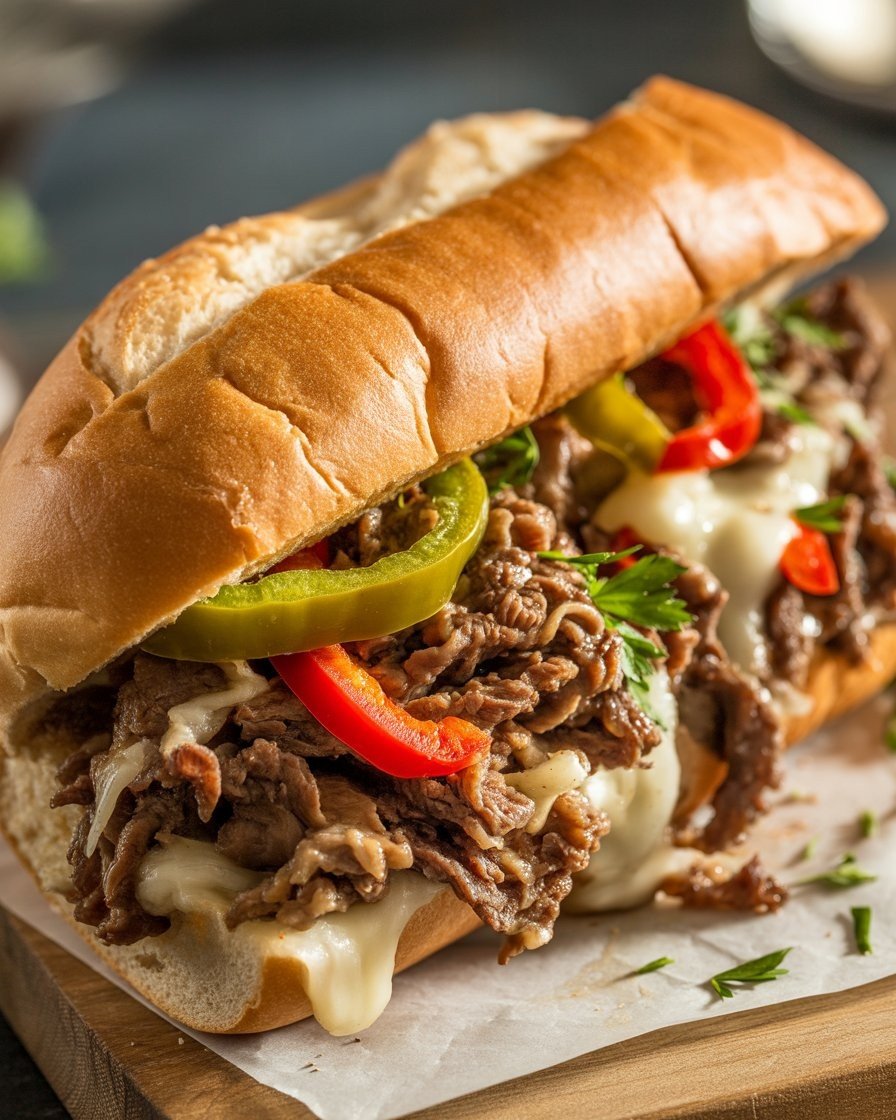
Philly Cheesesteak Recipe with Peppers and Onions Health Benefits
While Philly Cheesesteak Recipe with Peppers and Onions is typically enjoyed as a hearty indulgence, it can be tailored to offer some health benefits. The ribeye steak provides a generous source of high-quality protein, important for muscle repair and maintenance.
The onions and bell peppers lend a boost of dietary fiber, vitamin C, and beneficial phytonutrients that support immune health and overall wellness. Olive oil is a heart-healthy fat that can help reduce inflammation.
To lighten the meal, you can opt for leaner cuts like sirloin, use reduced-fat cheese, or swap the traditional hoagie roll for a whole wheat or whole grain alternative for extra fiber and micronutrients. Skipping or reducing mayonnaise can also decrease overall calorie and fat content.
For those watching sodium, making your own rolls and carefully seasoning can help lower salt intake. By balancing ingredients and moderating portion size, this Philly Cheesesteak with Peppers and Onions can fit into a balanced diet, especially when paired with fresh salads or roasted veggies.
FAQs About Philly Cheesesteak Recipe with Peppers and Onions
Can I use a different cut of steak for the Philly Cheesesteak Recipe with Peppers and Onions?
Yes, while ribeye is preferred for its tenderness and flavor, you can use sirloin, flank steak, or even thinly sliced chicken or mushrooms for alternative versions.
How do I get the cheese to melt properly in my Philly Cheesesteak Recipe with Peppers and Onions?
After topping the hot steak and peppers mixture with cheese, cover the pan with a lid or piece of foil for a minute to trap steam and promote melting.
Are there gluten-free options for this recipe?
Absolutely! Use gluten-free bread or rolls and ensure all sauces and toppings are gluten-free to accommodate dietary needs.
Can I prepare the steak and pepper mixture ahead of time?
Yes. Prepare and refrigerate the steak-pepper-onion mix up to 1 day ahead, then reheat and add cheese just before serving for best texture.
What’s the best cheese to use in a Philly Cheesesteak Recipe with Peppers and Onions?
Provolone is classic, but Cheez Whiz or American cheese delivers extra creaminess. Use whichever fits your preference.
Crafting the perfect Philly Cheesesteak Recipe with Peppers and Onions at home is both satisfying and delicious. This iconic sandwich brings together the best elements of Philly comfort food—tender steak, melted cheese, and flavorful peppers and onions—all nestled in a soft yet sturdy roll. With the step-by-step guide, tips for mastery, and serving ideas outlined above, you’re ready to bring the flavors of Philadelphia into your kitchen for family meals, casual gatherings, or a cozy dinner. Make it your own with suggested variations and savor every bite of this beloved American classic.
Ingredients
- 1 lb ribeye steak, thinly sliced
- 1 large green bell pepper, sliced
- 1 large onion, sliced
- 4 hoagie rolls
- 8 slices provolone cheese
- 2 tablespoons vegetable oil
- Salt and black pepper to taste
- 1 tablespoon Worcestershire sauce
Instructions
-
1Heat 1 tablespoon of vegetable oil in a large skillet over medium heat. Add the onions and green bell pepper, sauté for 6-8 minutes until softened.
-
2Remove the vegetables from the skillet and set aside. Add the remaining oil to the skillet, then add the thinly sliced ribeye steak. Season with salt and black pepper.
-
3Cook the steak for 3-4 minutes, stirring frequently, until just browned. Stir in Worcestershire sauce for extra flavor.
-
4Return the sautéed peppers and onions to the skillet and toss everything together until heated through.
-
5Divide the steak, peppers, and onions mixture into 4 portions. Place each portion onto the bottom half of a toasted hoagie roll.
-
6Top each sandwich with 2 slices of provolone cheese and cover until melted. Serve immediately.
Approximate Information for One Serving
Nutrition Disclaimers
Number of total servings shown is approximate. Actual number of servings will depend on your preferred portion sizes.
Nutritional values shown are general guidelines and reflect information for 1 serving using the ingredients listed, not including any optional ingredients. Actual macros may vary slightly depending on specific brands and types of ingredients used.
To determine the weight of one serving, prepare the recipe as instructed. Weigh the finished recipe, then divide the weight of the finished recipe (not including the weight of the container the food is in) by the desired number of servings. Result will be the weight of one serving.
Did you make this recipe?
Please consider Pinning it!!

Leave a Reply