
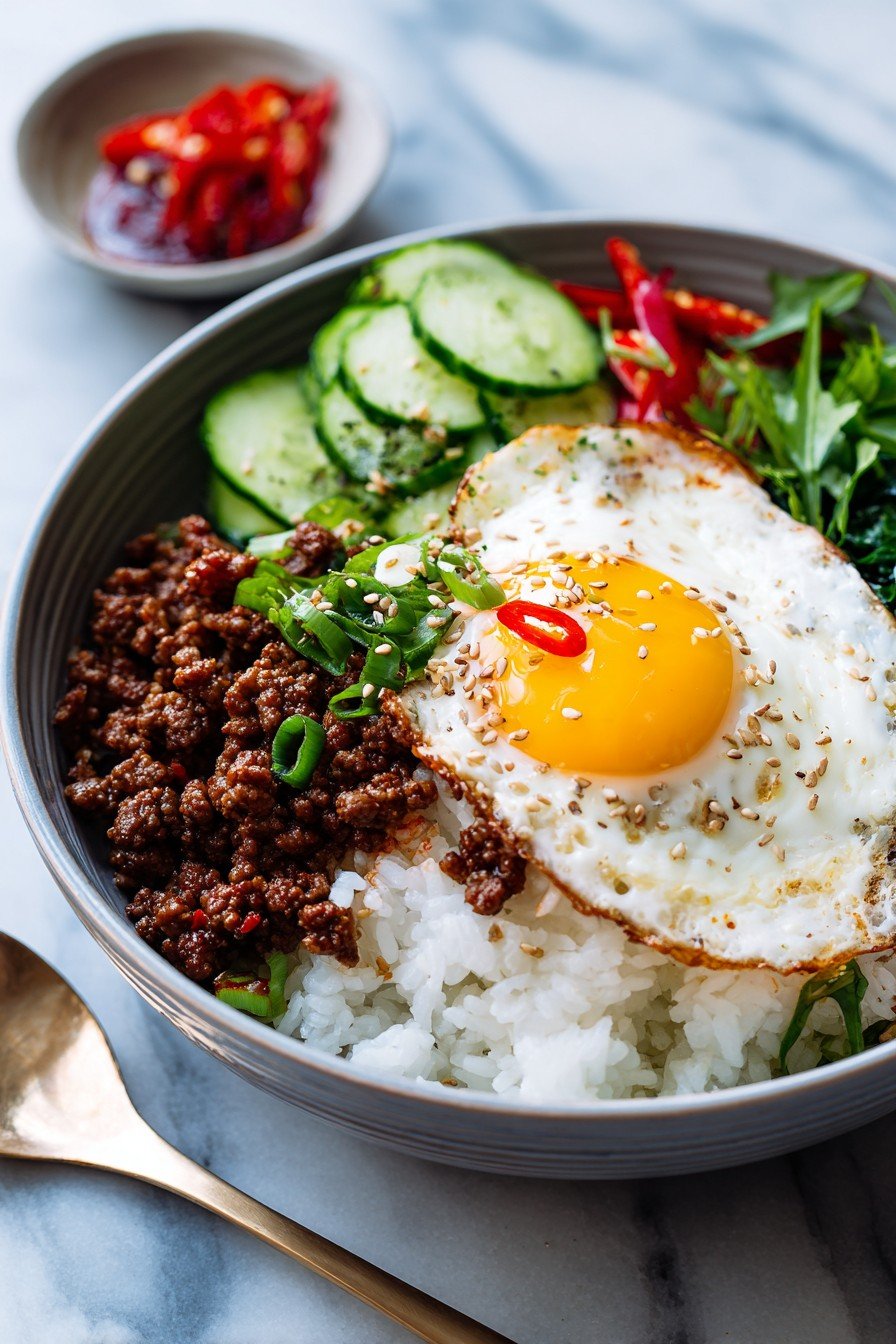
Hey y'all! If you're craving bold flavors without spending hours in the kitchen, this Korean Ground Beef Bowl is your new go-to recipe. It's savory, a little sweet, and perfectly spiced, making it ideal for busy weeknights, meal prep, or when you just want some comforting Asian-inspired goodness. This bowl brings together juicy Ground Beef, fluffy rice, and vibrant garnishes in a hearty, customizable meal the whole family will ask for again and again. Let’s get cooking!
Why You'll Love This
- On the table in less than 30 minutes from start to finish.
- Packs tons of bold, umami flavor with minimal effort.
- Perfect for meal prep or quick weeknight dinners.
- Highly customizable with your choice of veggies and spices.
- Made with simple pantry staples you probably already have.
Ingredients
- 1 pound (450g) lean Ground Beef
- 2 teaspoons sesame oil
- 3 cloves garlic, minced
- 1 teaspoon fresh ginger, grated (or ½ teaspoon ground ginger)
- ¼ cup (60ml) low-sodium soy sauce
- ¼ cup (50g) light brown sugar, packed
- 1 tablespoon gochujang (Korean chili paste) or ½ teaspoon crushed red pepper flakes
- 1 tablespoon rice vinegar
- 2 green onions, sliced
- 1 tablespoon sesame seeds
- 2 cups (about 320g) cooked white rice, for serving
- Optional: shredded carrots, sliced cucumber, or steamed broccoli for garnish
Directions
Step 1: Prepare the Rice
Cook 2 cups of white rice according to package instructions and set aside, keeping it warm.
Step 2: Cook the Beef
In a large skillet over medium-high heat, add 2 teaspoons of sesame oil. Add the ground beef and break it apart with a wooden spoon. Cook for 4-5 minutes until it’s no longer pink and slightly browned.
Step 3: Add Garlic and Ginger
Stir in the minced garlic and grated ginger. Cook for another 1-2 minutes until fragrant.
Step 4: Mix in the Sauce
In a small bowl, whisk together the soy sauce, brown sugar, gochujang, and rice vinegar. Pour the sauce into the skillet with the beef. Let it simmer for 2-3 minutes, allowing the flavors to meld and the sauce to thicken slightly.
Step 5: Garnish and Serve
Spoon the savory beef mixture over bowls of steamed rice. Top each bowl with sliced green onions, sesame seeds, and any optional garnishes like carrots, cucumber, or broccoli. Serve immediately and enjoy!
Notes
- Use lean ground beef to prevent excess grease; drain if necessary before adding the sauce.
- For extra heat, double the amount of gochujang or add Sriracha to taste.
- If you want a lower-carb option, serve over cauliflower rice instead of white rice.
Variations
- Ground Chicken or Turkey: Substitute beef with ground chicken or turkey for a leaner bowl.
- Vegetarian: Swap beef for crumbled firm tofu or plant-based ground "meat" alternatives.
- Extra Veggies: Add sautéed bell peppers, snap peas, or spinach to the mixture for bonus nutrition.
Required Equipment
- Large skillet or frying pan
- Wooden spoon or spatula
- Measuring cups and spoons
- Medium saucepan (for rice)
- Knife and cutting board
Storage Instructions
Store leftovers in an airtight container in the refrigerator for up to 4 days. Reheat in the microwave or on the stovetop over low heat, adding a splash of water if needed. Cooked rice and beef can be frozen separately for up to 2 months for future quick meals.
Suggested Pairings & Serving Recommendations
- Serve alongside quick-pickled cucumbers or kimchi for a zesty kick.
- Pair with steamed or roasted broccoli, green beans, or a fresh cabbage slaw.
- Top with a fried or soft-boiled egg for extra richness and flavor.
Pro Tips
- Browning the beef well before adding sauce creates a richer, more satisfying flavor.
- Let the sauce simmer fully to prevent a watery texture and bring all the ingredients together.
- Don't skip the garnishes—fresh green onions and sesame seeds add crunch and classic Korean flair!
FAQ
- Can I make this Korean Ground Beef Bowl ahead of time?
- Absolutely! The beef mixture and cooked rice both store well separately and reheat beautifully for meal prep.
- Is this recipe gluten-free?
- It can be made gluten-free by using tamari or coconut aminos instead of soy sauce and ensuring your gochujang is gluten-free.
- Can I use other types of meat?
- Yes! Ground pork, chicken, or turkey all work well and each gives the dish a tasty twist.
Ingredients
- 1 pound (450g) lean ground beef
- 2 teaspoons sesame oil
- 3 cloves garlic, minced
- 1 teaspoon fresh ginger, grated (or ½ teaspoon ground ginger)
- ¼ cup (60ml) low-sodium soy sauce
- ¼ cup (50g) light brown sugar, packed
- 1 tablespoon gochujang (Korean chili paste) or ½ teaspoon crushed red pepper flakes
- 1 tablespoon rice vinegar
- 2 green onions, sliced
- 1 tablespoon sesame seeds
- 2 cups (about 320g) cooked white rice, for serving
- Optional: shredded carrots, sliced cucumber, or steamed broccoli for garnish
Instructions
-
1Cook 2 cups of white rice according to package instructions and set aside, keeping it warm.
-
2In a large skillet over medium-high heat, add 2 teaspoons of sesame oil. Add the ground beef and break it apart with a wooden spoon. Cook for 4-5 minutes until it’s no longer pink and slightly browned.
-
3Stir in the minced garlic and grated ginger. Cook for another 1-2 minutes until fragrant.
-
4In a small bowl, whisk together the soy sauce, brown sugar, gochujang, and rice vinegar. Pour the sauce into the skillet with the beef. Let it simmer for 2-3 minutes, allowing the flavors to meld and the sauce to thicken slightly.
-
5Spoon the savory beef mixture over bowls of steamed rice. Top each bowl with sliced green onions, sesame seeds, and any optional garnishes like carrots, cucumber, or broccoli. Serve immediately and enjoy!
Approximate Information for One Serving
Nutrition Disclaimers
Number of total servings shown is approximate. Actual number of servings will depend on your preferred portion sizes.
Nutritional values shown are general guidelines and reflect information for 1 serving using the ingredients listed, not including any optional ingredients. Actual macros may vary slightly depending on specific brands and types of ingredients used.
To determine the weight of one serving, prepare the recipe as instructed. Weigh the finished recipe, then divide the weight of the finished recipe (not including the weight of the container the food is in) by the desired number of servings. Result will be the weight of one serving.
Did you make this recipe?
Please consider Pinning it!
Leave a Reply