
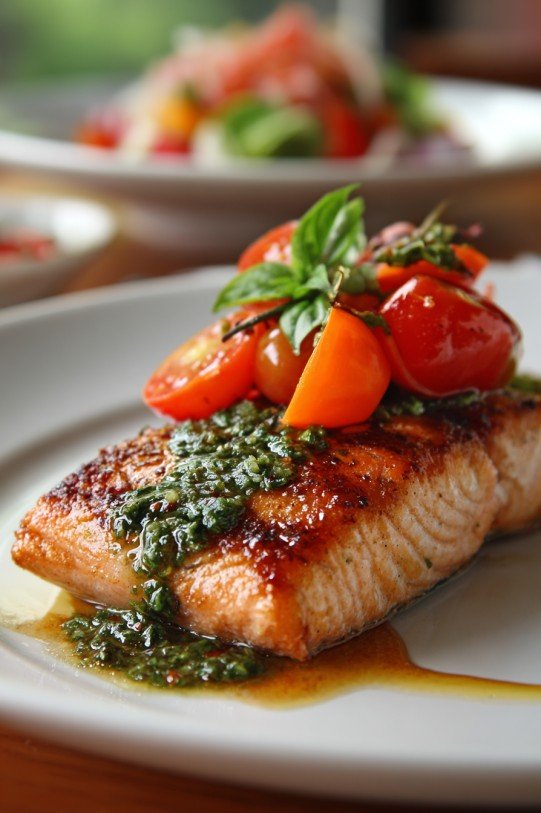
Hey y'all! Ready for a dinner that's as impressive as it is easy? This Salmon with Basil Sauce and Tomato Salad is bursting with bright, fresh flavors, tender flaky Salmon, and a zesty basil sauce that’s absolutely irresistible. It’s perfect for weeknight dinners, summer gatherings, or impressing guests without breaking a sweat. Let’s get cooking!
Why You'll Love This
- Quick and easy preparation makes it ideal for busy weeknights.
- The basil sauce adds a fresh, herbaceous punch that takes salmon to the next level.
- The tomato salad offers a juicy, vibrant contrast to the rich salmon.
- This dish is wholesome, gluten-free, and packed with omega-3s and vitamins.
- It’s as beautiful to look at as it is delicious to eat!
Ingredients
For the Salmon
- 4 salmon fillets (about 6 oz each, skin-on or skinless)
- 2 tablespoon olive oil
- ½ teaspoon salt
- ¼ teaspoon black pepper
- ½ teaspoon garlic powder
- Lemon wedges (for serving)
For the Basil Sauce
- 1 cup fresh basil leaves, packed
- 2 tablespoon pine nuts (or walnuts)
- 1 clove garlic
- ⅓ cup extra virgin olive oil
- 2 tablespoon grated Parmesan cheese
- 1 tablespoon fresh lemon juice
- ¼ teaspoon salt
- ⅛ teaspoon pepper
For the Tomato Salad
- 2 cups cherry or grape tomatoes, halved
- ¼ cup thinly sliced red onion
- 2 tablespoon fresh basil, sliced
- 2 tablespoon extra virgin olive oil
- 1 tablespoon balsamic vinegar
- ¼ teaspoon salt
- ⅛ teaspoon pepper
Directions
Step 1: Prep the Basil Sauce
- In a blender or food processor, combine basil, pine nuts, garlic, lemon juice, Parmesan, salt, and pepper. Pulse until finely chopped.
- With the motor running, slowly drizzle in olive oil and blend until smooth. Taste and adjust seasoning if needed. Set aside.
Step 2: Make the Tomato Salad
- In a large mixing bowl, combine halved tomatoes, red onion, fresh basil, olive oil, balsamic vinegar, salt, and pepper.
- Toss gently to combine. Set aside to let the flavors meld.
Step 3: Cook the Salmon
- Pat the salmon fillets dry and rub both sides with olive oil. Season with salt, pepper, and garlic powder.
- Heat a large nonstick skillet over medium-high heat. When hot, add salmon skin-side down (if applicable).
- Cook for 4 minutes, then flip and cook for another 3-4 minutes until the salmon is opaque and flakes easily with a fork.
- (Alternatively, bake at 400°F/200°C for 10-12 minutes if preferred.)
Step 4: Assemble and Serve
- Place each salmon fillet on a plate. Spoon basil sauce generously over the top.
- Serve with a hearty portion of the tomato salad and a wedge of lemon on the side.
Notes
- Use very fresh basil for the brightest, most vibrant flavor in your sauce.
- Let the salmon rest for 2 minutes after cooking to keep it juicy.
- For extra-crisp skin, make sure your skillet is very hot before adding the salmon.
Variations
- Grilled Salmon: Grill the salmon on medium-high heat for about 4 minutes per side instead of pan-searing.
- Creamy Basil Sauce: Stir in 2 tablespoons of Greek yogurt to make the sauce creamy and tangy.
- Avocado Tomato Salad: Add 1 diced ripe avocado to the tomato salad for extra creaminess and flavor.
Required Equipment
- Large nonstick skillet or grill pan
- Blender or food processor
- Mixing bowls
- Spatula
- Sharp knife
- Cutting board
Storage Instructions
Store leftover salmon, sauce, and tomato salad in separate airtight containers in the refrigerator for up to 2 days. Reheat the salmon gently in the microwave or serve cold for a tasty salad topper. The basil sauce may discolor slightly but remains flavorful for up to 3 days. Tomato salad is best enjoyed fresh.
Suggested Pairings & Serving Recommendations
- Serve alongside herbed couscous or quinoa for a heartier meal.
- A crisp white wine, like Sauvignon Blanc, perfectly complements the basil and salmon.
- Add crusty bread to soak up every drop of vibrant basil sauce.
Pro Tips
- Don't overcrowd the pan—cook salmon in batches if necessary for that perfect sear.
- Use room temperature salmon to ensure even cooking throughout.
- Taste and adjust the acidity in the salad with more balsamic or lemon juice as needed.
FAQ
- Can I use frozen salmon?
- Yes! Thaw frozen salmon fillets overnight in the fridge and pat very dry before cooking for best results.
- Is it okay to substitute dried basil for fresh?
- Fresh basil is highly recommended for this sauce’s flavor, but you can use 1 tablespoon dried basil in a pinch—it won't be as vibrant.
- What's the best way to know if the salmon is cooked?
- Salmon is done when it reaches an internal temperature of 145°F (63°C) and flakes easily with a fork.
Prep Time: 20 minutes
Cook Time: 8 minutes
Total Time: 28 minutes
Ingredients
- 4 skinless salmon fillets (about 150g each)
- 2 tablespoons olive oil, divided
- Salt and freshly ground black pepper, to taste
- 1 cup fresh basil leaves
- ½ cup Greek yogurt
- 1 tablespoon lemon juice
- 2 cups cherry tomatoes, halved
- ¼ cup thinly sliced red onion
- 1 tablespoon balsamic vinegar
Instructions
-
1Pat salmon fillets dry and season both sides with salt and pepper.
-
2Heat 1 tablespoon olive oil in a large nonstick skillet over medium heat. Add salmon fillets and cook for 4-5 minutes on each side, until golden and cooked through. Remove from skillet and set aside.
-
3In a food processor, blend basil leaves, Greek yogurt, lemon juice, and a pinch of salt until smooth. Set basil sauce aside.
-
4In a mixing bowl, combine cherry tomatoes, red onion, remaining olive oil, balsamic vinegar, salt, and pepper. Toss gently to mix.
-
5To serve, spoon basil sauce over the salmon fillets and accompany with tomato salad on the side.
Approximate Information for One Serving
Nutrition Disclaimers
Number of total servings shown is approximate. Actual number of servings will depend on your preferred portion sizes.
Nutritional values shown are general guidelines and reflect information for 1 serving using the ingredients listed, not including any optional ingredients. Actual macros may vary slightly depending on specific brands and types of ingredients used.
To determine the weight of one serving, prepare the recipe as instructed. Weigh the finished recipe, then divide the weight of the finished recipe (not including the weight of the container the food is in) by the desired number of servings. Result will be the weight of one serving.
Did you make this recipe?
Please consider Pinning it!!
Leave a Reply