
Hey y'all! If you're craving a meal that's mouthwatering, savory-sweet, and sure to impress any crowd, this Teriyaki Glazed Salmon checks all the boxes. Tender, flaky Salmon is lacquered with a rich teriyaki glaze that's sticky, slightly sweet, and bursting with umami flavor. Whether it's a quick weeknight dinner, a special occasion, or you just want to treat yourself, this recipe brings restaurant-quality taste right to your kitchen. Let's get cooking!
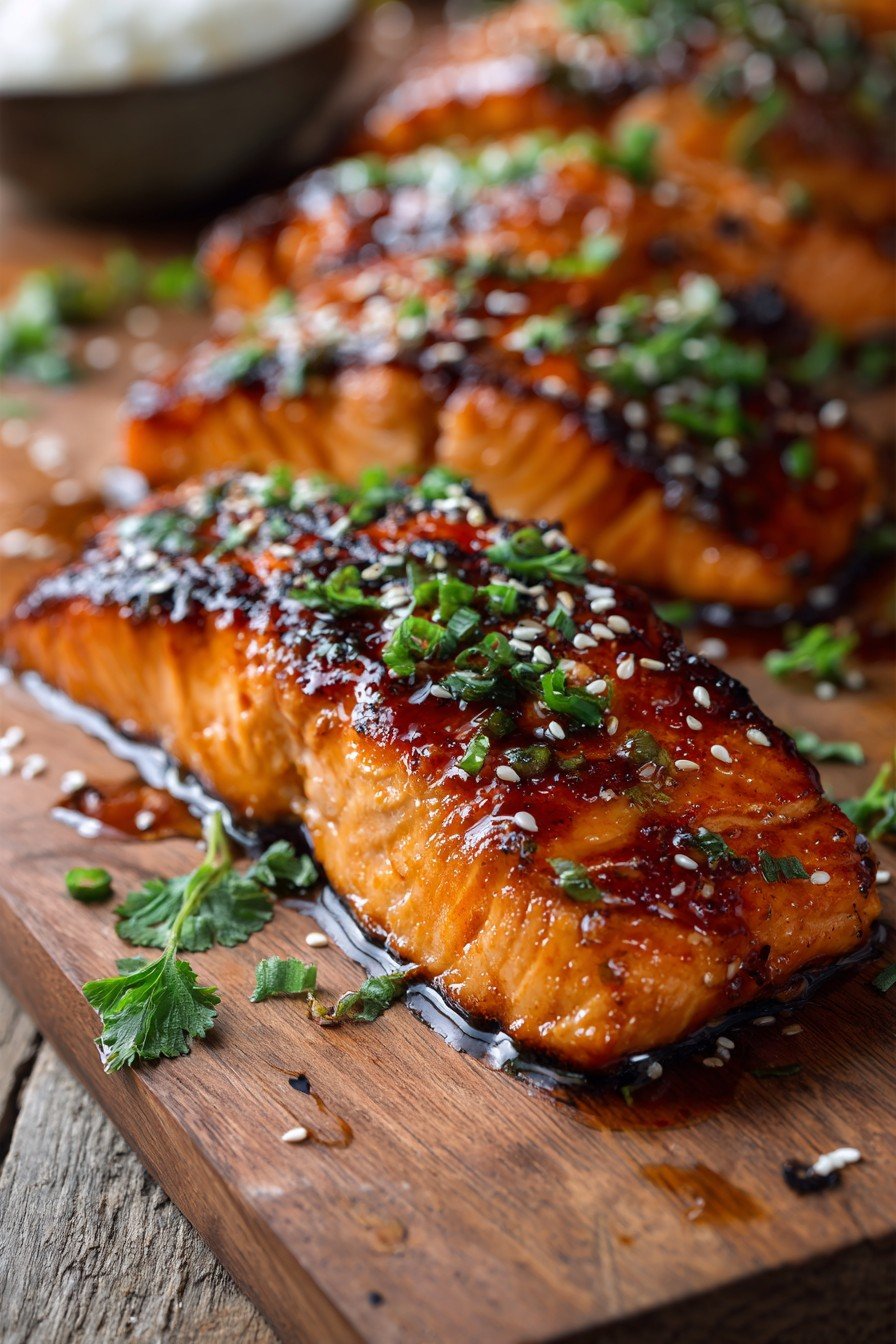
Why You'll Love This
- Quick and easy: Ready in under 30 minutes for those busy weeknights.
- Restaurant-quality flavor: The homemade teriyaki sauce is glossy, packed with sweet and savory notes.
- Versatile: Perfect for family dinners, meal prep, or impressing dinner guests.
- Healthy: Salmon is loaded with omega-3s and high-quality protein.
- Minimal cleanup: Just a handful of simple ingredients and easy-to-clean pans.
Ingredients
- 4 salmon fillets (each about 6 oz, skin-on or skinless as you prefer)
- Salt and freshly ground black pepper, to taste
- 2 teaspoons olive oil
- ¼ cup low-sodium soy sauce
- 2 tablespoons honey (or brown sugar for a deeper flavor)
- 2 tablespoons mirin (or substitute with dry sherry)
- 1 tablespoon rice vinegar
- 1 large garlic clove, minced
- 1 teaspoon fresh ginger, grated
- 1 teaspoon cornstarch mixed with 1 tablespoon cold water (slurry)
- 2 teaspoons sesame seeds, for garnish
- 2 green onions, thinly sliced, for garnish
Directions
Step 1: Prep and Season the Salmon
Pat the salmon fillets dry with paper towels. Season both sides lightly with salt and pepper. Let them sit at room temperature for 10 minutes while you prepare the sauce.
Step 2: Make the Teriyaki Glaze
In a small saucepan over medium heat, combine soy sauce, honey, mirin, rice vinegar, garlic, and ginger. Stir gently and bring to a simmer. Whisk in the cornstarch slurry and cook for 1-2 minutes until the sauce thickens and becomes glossy. Remove from heat and set aside.
Step 3: Sear the Salmon
Heat olive oil in a large nonstick or cast-iron skillet over medium-high heat. Place the salmon fillets skin side down (if skin-on). Sear for 3-4 minutes, then carefully flip and cook an additional 2-3 minutes, until the salmon is nearly cooked through and nicely golden.
Step 4: Glaze and Finish
Reduce heat to low. Brush the teriyaki glaze generously over each fillet. Let the salmon cook for 1-2 more minutes, basting with extra glaze, until the fish is sticky and caramelized.
Step 5: Garnish & Serve
Transfer salmon to plates, sprinkle with toasted sesame seeds and green onions, and serve hot!
Notes
- For the best flavor, don’t overcook the salmon; remove it from heat just as it turns opaque.
- Prep your ingredients ahead of time—the process moves fast once you start cooking.
- If your glaze thickens up too much, whisk in a splash of water.
Variations
- Spicy Teriyaki Salmon: Add a teaspoon of sriracha or red pepper flakes to the glaze for a kick.
- Broiled Teriyaki Salmon: Place glazed fillets under a broiler for the last 2 minutes to get a sticky, charred finish.
- Sheet Pan Teriyaki Salmon: Bake salmon and vegetables together at 400°F (200°C) for 15 minutes, brushing glaze on halfway through.
Required Equipment
- Nonstick or cast iron skillet
- Small saucepan
- Whisk or silicone brush
- Measuring cups and spoons
- Fish spatula
Storage Instructions
Let leftovers cool completely. Store glazed salmon in an airtight container in the refrigerator for up to 2 days. Reheat gently in a skillet over low heat or in the microwave for 1-2 minutes, adding a splash of water if needed to prevent drying out. Not recommended for freezing, as the glaze texture changes upon thawing.
Suggested Pairings & Serving Recommendations
- Serve over steamed jasmine rice or brown rice for a hearty meal.
- Pair with roasted broccoli, snap peas, or sautéed bok choy for freshness.
- Add a crisp cucumber salad or pickled veggies for extra crunch and brightness.
Pro Tips
- Always bring salmon to room temperature before cooking for even doneness.
- For super glossy glaze, apply it in layers—little by little—while cooking.
- Use fresh garlic and ginger for the brightest flavor in your teriyaki glaze.
FAQ
Can I use frozen salmon?
Yes! Just thaw completely and pat dry before seasoning and cooking to prevent excess moisture.
Can I make the teriyaki glaze in advance?
Definitely. Store the glaze in an airtight jar in the fridge for up to 5 days; warm it before using.
How do I know when my salmon is perfectly cooked?
The salmon will be opaque and easily flake with a fork; the internal temperature should reach 125-130°F (52-54°C) for moist, tender fillets.
Ingredients
- 4 salmon fillets (about 6 oz each)
- ⅓ cup soy sauce
- 3 tablespoons honey
- 2 tablespoons mirin or rice vinegar
- 2 tablespoons brown sugar
- 2 cloves garlic, minced
- 1 teaspoon fresh ginger, grated
- 1 teaspoon sesame oil
- 1 teaspoon cornstarch mixed with 1 tablespoon water
- 2 green onions, sliced (for garnish)
- 1 teaspoon sesame seeds (for garnish)
Instructions
-
1Preheat your oven to 400°F (200°C). Line a baking sheet with parchment paper or foil.
-
2In a small saucepan, combine soy sauce, honey, mirin, brown sugar, garlic, ginger, and sesame oil. Bring to a simmer over medium heat.
-
3Stir in the cornstarch slurry and cook for 1-2 minutes, until the sauce thickens. Remove from heat.
-
4Place salmon fillets skin-side down on the prepared baking sheet. Brush generously with the teriyaki sauce.
-
5Bake for 15-18 minutes, or until the salmon is cooked through and flakes easily with a fork. Halfway through baking, brush once more with remaining sauce.
-
6Garnish with sliced green onions and sesame seeds before serving.
Approximate Information for One Serving
Nutrition Disclaimers
Number of total servings shown is approximate. Actual number of servings will depend on your preferred portion sizes.
Nutritional values shown are general guidelines and reflect information for 1 serving using the ingredients listed, not including any optional ingredients. Actual macros may vary slightly depending on specific brands and types of ingredients used.
To determine the weight of one serving, prepare the recipe as instructed. Weigh the finished recipe, then divide the weight of the finished recipe (not including the weight of the container the food is in) by the desired number of servings. Result will be the weight of one serving.
Did you make this recipe?
Please consider Pinning it!!
Leave a Reply