
Hey y'all! If you’re craving a bold, slurp-worthy noodle dish that’s packed with sweet, spicy, and savory flavors, these Saucy Gochujang Noodles with Chicken are about to be your new favorite meal. Juicy Chicken, chewy noodles, and an ultra-creamy, spicy sauce all come together in just one pan—making this perfect for quick weeknights or an impressive dinner when friends come over. Trust me, your taste buds won’t forget this! Let’s get cooking!
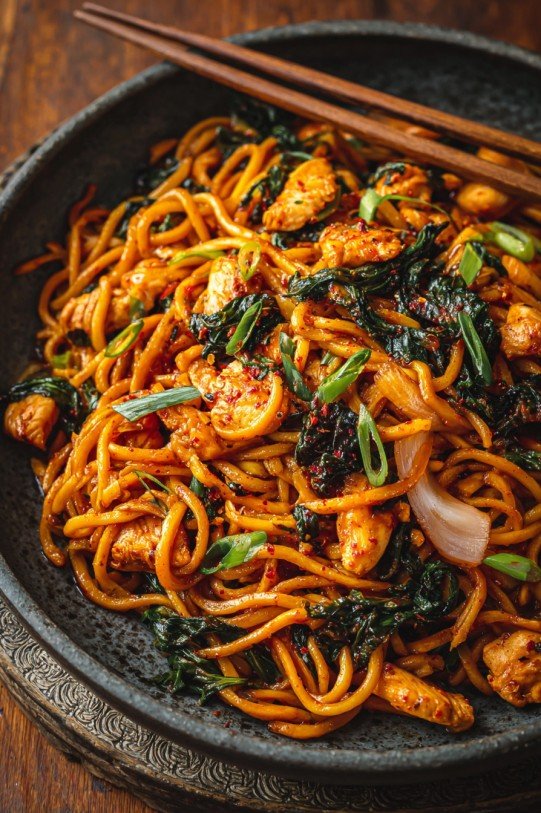
Why You'll Love This
- Super quick: This dish comes together in just 30 minutes, making it perfect for busy nights.
- Unbeatable flavor: The gochujang-based sauce is spicy, sweet, and absolutely addictive.
- Customizable heat: Easily adjust the spice level to suit everyone’s taste.
- Packed with protein: Tender Chicken makes this a satisfying, one-bowl meal.
- Easy cleanup: Everything comes together in just one pan!
Ingredients
- 8 oz (225g) dried wheat noodles or ramen noodles
- 1 lb (450g) boneless, skinless chicken thighs, cut into bite-sized pieces
- 2 tablespoon vegetable oil
- 1 small onion, thinly sliced
- 3 cloves garlic, minced
- 1 cup (120g) julienned carrots
- 1 cup (80g) shredded cabbage
- 2 green onions, sliced (plus more for garnish)
- 1 tablespoon sesame seeds, for garnish
- Salt and pepper, to taste
- For the Sauce:
- 3 tablespoon gochujang (Korean chili paste)
- 2 tablespoon soy sauce
- 1 tablespoon honey or brown sugar
- 1 tablespoon rice vinegar
- 1 tablespoon sesame oil
- ½ cup (120ml) low-sodium chicken broth or water
Directions
Step 1: Prep the Noodles
Cook noodles according to package directions (about 3-4 minutes for ramen or wheat noodles). Drain, rinse with cold water, and set aside.
Step 2: Mix the Sauce
In a small bowl, whisk together gochujang, soy sauce, honey, rice vinegar, sesame oil, and chicken broth until smooth and well combined.
Step 3: Sear the Chicken
Heat 1 tablespoon of vegetable oil in a large nonstick skillet or wok over medium-high heat. Add chicken, season with salt and pepper, and cook for 5-6 minutes, stirring occasionally, until golden and cooked through. Transfer to a plate and set aside.
Step 4: Sauté the Veggies
In the same pan, add remaining oil. Toss in onions and carrots and sauté for 2-3 minutes until slightly softened. Stir in garlic and cook for another 30 seconds until fragrant. Add cabbage and cook for 1 more minute.
Step 5: Bring It All Together
Return the chicken to the pan. Add cooked noodles, green onions, and pour in the sauce. Toss everything together over medium heat for 2-3 minutes, or until noodles are glossy and sauce clings to every bite.
Step 6: Serve & Garnish
Divide among bowls, sprinkle with sesame seeds and extra green onions, and serve immediately.
Notes
- If you want extra-saucy noodles, add an extra 2-3 tablespoons of chicken broth when tossing everything together.
- For crispier chicken, let it sear undisturbed for the first couple of minutes.
- Adjust gochujang to your heat preference—start small and add more if you love it spicy.
Variations
- Vegetarian: Swap chicken for crispy tofu or extra veggies like snap peas and mushrooms.
- Seafood Lover’s: Use shrimp or sliced squid in place of chicken.
- Gluten-Free: Use gluten-free tamari and rice noodles to suit your dietary needs.
Required Equipment
- Large nonstick skillet or wok
- Saucepan (for noodles)
- Cutting board and knife
- Tongs or spatula
- Mixing bowls
Storage Instructions
Transfer cooled leftovers to an airtight container and store in the fridge for up to 3 days. Reheat gently in the microwave or on the stovetop with a splash of water or broth to loosen the sauce. Freezing is not recommended, as the noodles may become mushy.
Suggested Pairings & Serving Recommendations
- Pair with a refreshing cucumber salad or quick kimchi for a fresh contrast.
- Serve with a fried egg on top for extra richness.
- Enjoy with a cold, crisp lager or sparkling water with lime.
Pro Tips
- Use cold rinsed noodles for best texture—this prevents clumping when they hit the hot pan.
- Slice all veggies thinly so they cook evenly and quickly.
- Add the sauce last for glossy, perfectly coated noodles every time.
FAQ
- Can I use chicken breast instead of thighs?
Yes! Chicken breast works well, just be careful not to overcook it as it dries out faster than thighs. - What if I can’t find gochujang?
You can substitute with a mix of miso paste, sriracha, and a touch of brown sugar, but the authentic flavor is best with gochujang. - Is this recipe very spicy?
It’s moderately spicy but easy to adjust—add less gochujang if you want a milder noodle dish.
Prep time: 10 minutes
Cook time: 20 minutes
Total time: 30 minutes
Ingredients
- 8 oz dried noodles (udon, ramen, or rice noodles)
- 2 boneless skinless chicken breasts, sliced thinly
- 2 tablespoons gochujang (Korean chili paste)
- 2 tablespoons soy sauce
- 1 tablespoon honey
- 2 teaspoons sesame oil
- 2 cloves garlic, minced
- 1 cup sliced bell peppers
- 2 green onions, sliced
- 1 tablespoon vegetable oil
- 1 teaspoon toasted sesame seeds (optional, for garnish)
Instructions
-
1Cook the noodles according to package instructions. Drain and set aside.
-
2In a small bowl, whisk together gochujang, soy sauce, honey, and sesame oil to make the sauce.
-
3Heat vegetable oil in a large skillet over medium-high heat. Add sliced chicken and cook until lightly browned and cooked through, about 5-6 minutes.
-
4Add minced garlic and sliced bell peppers to the skillet. Stir-fry for 2-3 minutes until peppers are slightly tender.
-
5Lower the heat and pour the prepared sauce over the chicken and vegetables. Add the cooked noodles and toss everything to combine well, coating the noodles in sauce.
-
6Serve noodles hot, garnished with sliced green onions and toasted sesame seeds if desired.
Approximate Information for One Serving
Nutrition Disclaimers
Number of total servings shown is approximate. Actual number of servings will depend on your preferred portion sizes.
Nutritional values shown are general guidelines and reflect information for 1 serving using the ingredients listed, not including any optional ingredients. Actual macros may vary slightly depending on specific brands and types of ingredients used.
To determine the weight of one serving, prepare the recipe as instructed. Weigh the finished recipe, then divide the weight of the finished recipe (not including the weight of the container the food is in) by the desired number of servings. Result will be the weight of one serving.
Did you make this recipe?
Please consider Pinning it!!
Leave a Reply